
The patience of pearls
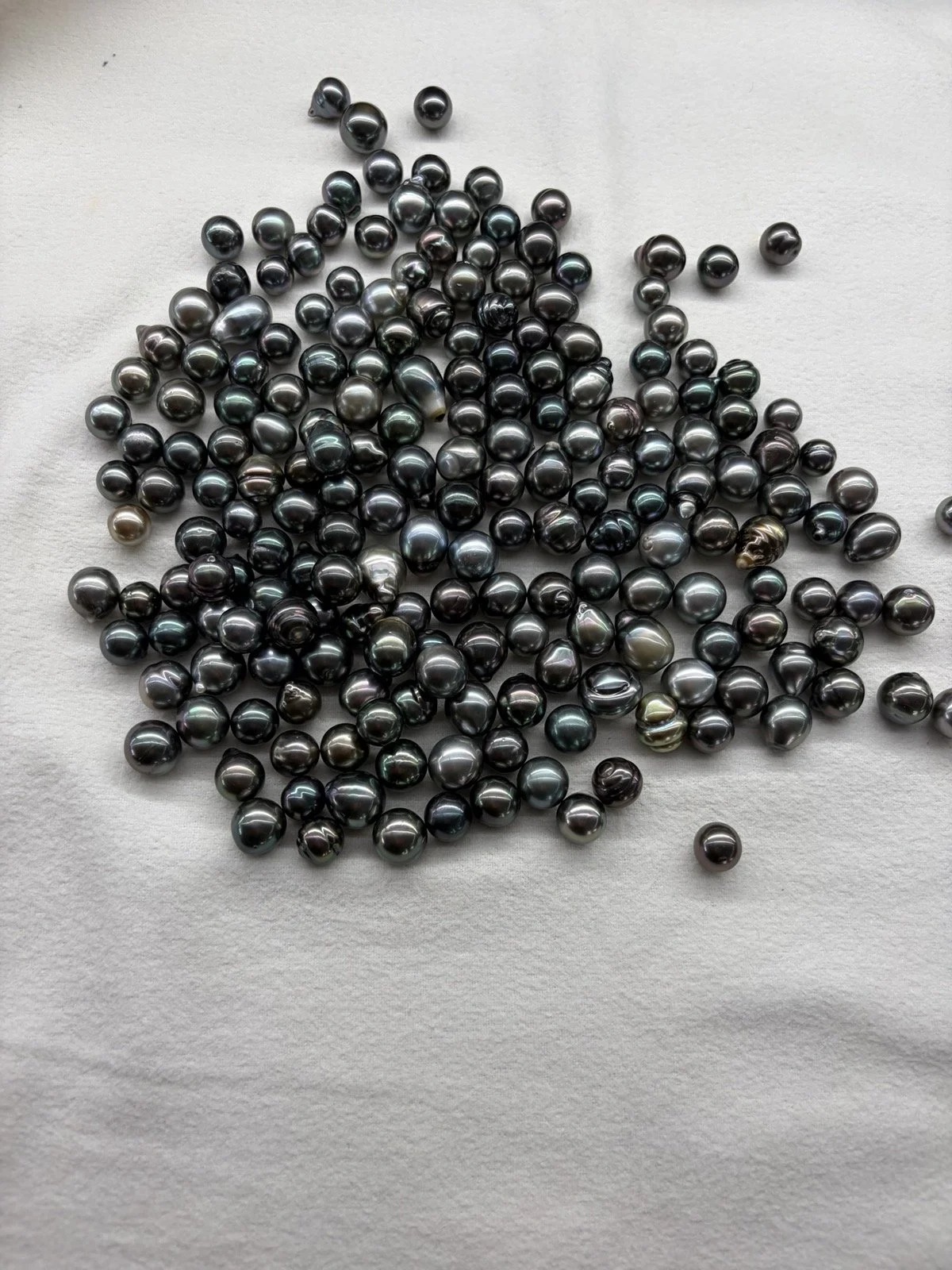
Tahitian pearls come in a remarkable color spectrum. From pale dove grey, pewter, charcoal and jet black to peacock, pistachio, eggplant, dusty rose and copper.
PRESENT CHAPTER 2 | 15 MAY 2026
Twenty-one days on the ocean gives one ample time for freeform thought. Life is reduced to a simple rhythm of sailing, eating and sleeping, repeated day after day beneath an endless procession of sea and sky. Removed from the noise and interruption of the outside world, the mind gradually begins to unclutter itself. Ideas arrive quietly out there. Thoughts deepen. Creativity has space to breathe.
The passage from California to the Marquesas Islands of French Polynesia is approximately 2,850 nautical miles. When travelling at an average speed of only seven or eight knots, it becomes a long crossing in every sense of the word. For me, it provided time to concentrate on designing pieces for a new jewellery collection.
Unfortunately, my workshop remained largely inaccessible throughout the voyage. We were on port tack for almost the entire crossing, which meant the studio sat permanently on the high side of the yacht. Even if I had managed to reach the bench comfortably, the workshop itself lies deep within the boat - hot, enclosed and airless underway. Attempting delicate work there would almost certainly have ended in seasickness.
So the designs remained sketches, ideas and notes waiting patiently for the right moment to emerge into physical form. I will have to wait until we settle into a quiet anchorage for an extended time before beginning the work properly, or perhaps until I return to my studio in New Zealand in a few months’ time.
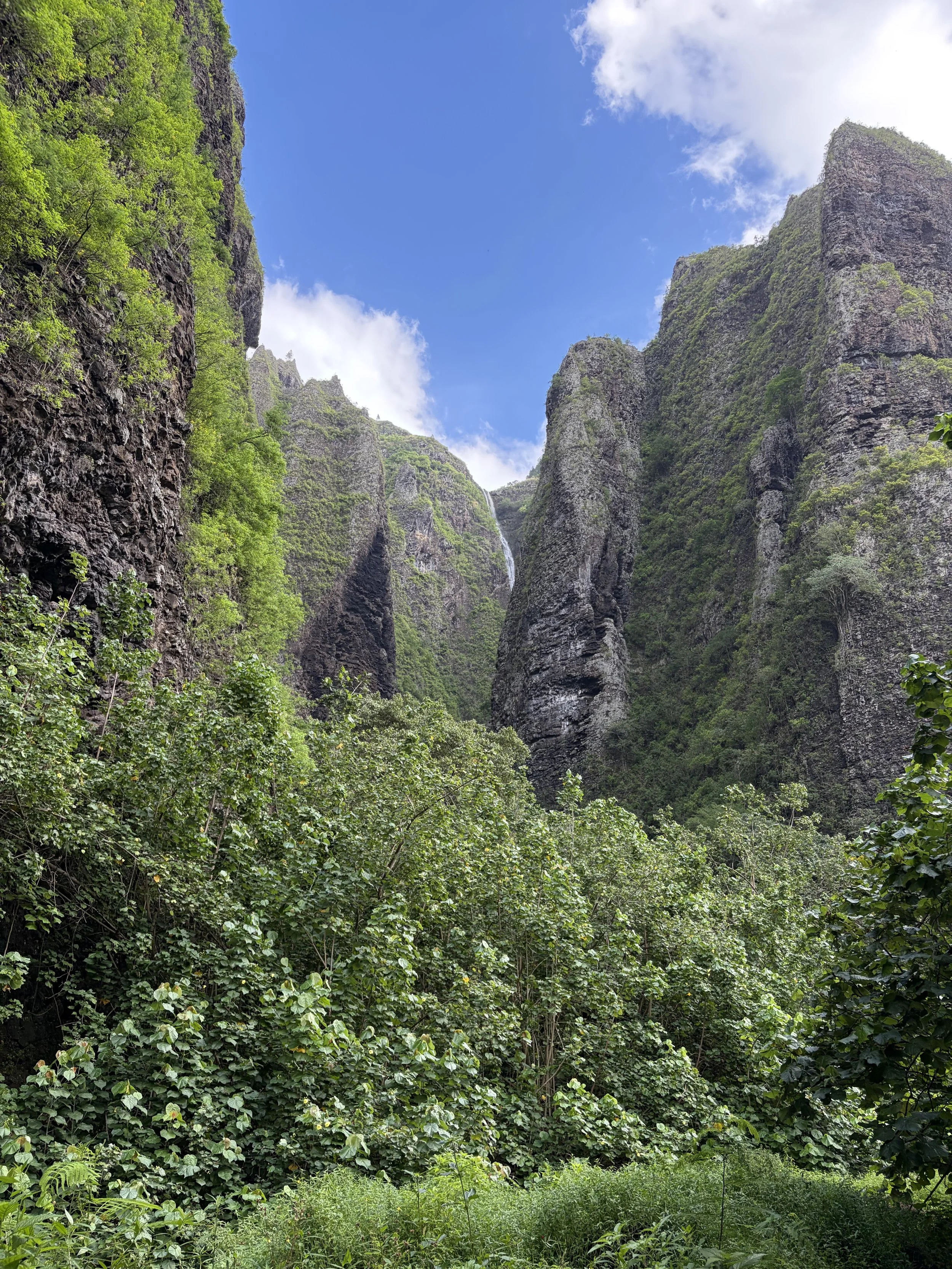
The Marquesas Islands. An untouched sanctuary of towering basalt spires, dramatic cliffs, and cascading waterfalls.
The Marquesas are unlike anywhere else I have ever seen. The islands rise abruptly from the Pacific in strange and dramatic forms, almost otherworldly in appearance, as though imagined rather than formed by nature. At times they feel less like tropical islands and more like landscapes from a science fiction novel.
We spent three weeks exploring the coastline of Nuku Hiva. Many of the bays and small villages are accessible only by sea or by steep mountain tracks, and horses remain an important form of transport for both people and goods. It is not unusual to see strings of horses heavily laden with copra and farm produce being led down to the shoreline, where the cargo is transferred onto boats for the final journey to market in the main village.
From the Marquesas we sailed onward to the Tuamotus, another island group within French Polynesia and the place I had most wanted to visit. The low coral atolls are renowned for the cultivation of Tahitian black pearls, and nearly every lagoon hosts pearl farms producing extraordinary pearls in subtle natural tones ranging from dove grey and deep graphite to the occasional dusky rose or pistachio green.
The atolls themselves are both beautiful and demanding places to navigate. Narrow reef passes open suddenly into vast lagoons that are often poorly charted and scattered with coral heads. Conditions can change quickly, and entering an atoll requires patience, timing and concentration. It is easy to understand why early explorers named them the Dangerous Isles.
I was determined to purchase pearls for my new designs and was fortunate to meet several dedicated pearl farmers who generously shared their knowledge and proudly demonstrated their craft.
The process itself is remarkably delicate. Each oyster is carefully seeded with a small nucleus, which the oyster recognises as a foreign body. To protect itself, it gradually secretes layers of nacre around the nucleus. Over time - sometimes as long as four years - these layers form the pearl. Once harvested, the process may begin again, with another nucleus implanted into the mantle of the oyster.
There is something deeply compelling about pearls to me. Perhaps it is the patience required to create them, or the way beauty emerges slowly through time, layer upon layer, hidden beneath the surface of the sea.
With a fistful of beautiful pearls, we moved on to Tahiti, a further two days’ sail from the Tuamotus. Here we returned briefly to reality, to the noise and bustle of the thriving city of Papeete. It is a good place to replenish food stores and attend to the boat’s needs, but before long we find ourselves yearning once again for the quiet of the islands and escape from the press of humanity.
The magical island of Moorea lies only nine miles from Papeete, though it feels like another world entirely. Life moves more slowly here and the population is sparse. One can easily imagine this is closer to what Tahiti may have been like a century ago.
We arrived through the reef into Cook’s Bay late at night. The lagoon lay black and still beneath us, the water like dark glass, while the scent of jasmine drifted through the warm tropical air. A scattering of lights along the shoreline and the occasional bark of a dog were the only sounds after the hectic pace of Papeete.
We will stay here for a few days - to swim, read and explore a little.
Until the next horizon,
Lou x