
New York, New York
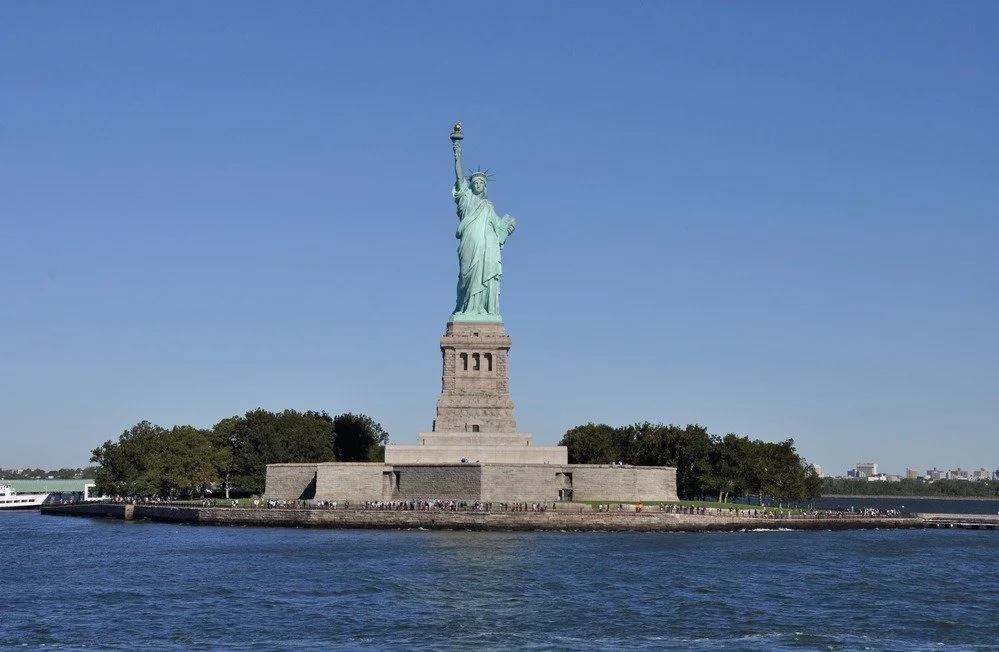
The Statue of Liberty
MEMORY CHAPTER 4 | 15 AUGUST 2026
After our wonderful experience with the Nova Scotian Schooner Association, we wanted more.
A little time spent on Google revealed several schooner events along the east coast of the United States, but one in particular caught our attention - the Great Chesapeake Bay Schooner Race (GCBSR). It is an annual fundraising event supporting educational programmes aimed at preserving and protecting the Chesapeake Bay. Each October, the schooners gather in Baltimore to race 130 nautical miles overnight to Norfolk, Virginia.
It sounded exactly like our sort of thing.
We left Portsmouth, Rhode Island on a blustery September day and sailed along Long Island Sound with a lively quartering wind that gave us a fast and satisfying run. This was also our long-awaited second attempt at transiting New York City via the East River - unfinished business from earlier in the year.
Timing was everything. We needed to enter the river so that we reached Hell Gate at slack water or with a fair tide. The current can run at five knots through that narrow stretch, and there is no room for error. Once through, we would spill out into New York Harbour.
The passage was electrifying.
LaGuardia Airport slid by on our port side, aircraft climbing overhead in quick succession. The United Nations building gleamed to starboard. Then we passed beneath the great spans of the Manhattan and Brooklyn Bridges, dwarfed by steel, stone and noise. After years of quiet anchorages, the roar of the city felt almost overwhelming - yet to sail through its very heart was thrilling.
Three hours after weighing anchor in Long Island Sound, we cleared the East River, dodged the Staten Island Ferry, and motored toward the Statue of Liberty for a slow, respectful circuit before heading back out into the Atlantic.
This time, New York was ours.
Our next destination was Chesapeake Bay via the Delaware River and the C&D Canal.
It was a blistering, airless Sunday as we motored up the glassy waters of the Delaware River toward the canal, our gateway to the upper reaches of the Chesapeake. Besides the schooner race, another great attraction was the town of Annapolis, full of character and steeped in the history of the United States.
The GCBSR fleet gathered along the public wharf in Baltimore. For two days the atmosphere was one of serious socialising - rum shared aboard neighbouring schooners, stories swapped, laughter echoing across the dock as crews reconnected and new friendships were forged.
Then race day arrived.
It was a magnificent sight: schooners under full sail, jostling for position on the start line, canvas drawing, crews calling to one another across the water. We had a superb start and swept down the bay, wind steady, the boat settled and moving beautifully. By the time we reached Norfolk we had secured third in class - a result we were quietly delighted with.
After the final celebrations in Norfolk, we knew it was time to retreat somewhere quiet. Steven was ready to begin his first painting aboard.
We cruised back up the eastern side of the Chesapeake, visiting the tiny hamlets and villages of Maryland’s shore. The landscape felt almost untouched - low-lying land, white clapboard houses, small wooden docks stretching into still creeks. It was easy to imagine the founding fathers sailing these same waters two and a half centuries ago.
We turned into the Tred Avon River, passing historic Oxford, and a little further upstream found a sheltered bay with flat calm water and almost no current. It was perfect.
This became our home for the next six weeks.
True to form, as everywhere we had been along the east coast, we were welcomed with extraordinary kindness. People rowed out to introduce themselves. We were invited to dinner. A car was offered for errands ashore. One afternoon a lady arrived by boat with a freshly baked cake. The generosity and openheartedness of the people we met never ceased to strengthen our faith in humanity.
As the leaves began to turn brilliant shades of gold and crimson and the geese gathered overhead before flying south, we settled in. Steven set up his tabletop easel in the deck saloon, transforming it into a studio. I worked on jewellery projects at my bench in the workshop while autumn quietly deepened around us.
It felt suspended in time.
Aptly, the painting Steven completed in Maryland depicted the sea battle between Constitution and Guerriere during the War of 1812 - history echoing in the very waters around us. There was something fitting about painting a moment of early American naval triumph while anchored in the calm creeks of the Chesapeake.
But autumn sharpens quickly.
We left the Tred Avon River on a cold, windy day in early November. Sleet lay on the deck - a clear signal that it was time to head south. As we sailed out into Chesapeake Bay, the wind built rapidly from the northeast, climbing to 35 knots. We had more sail set than we should have. Reducing it would have been difficult and potentially more dangerous than carrying on.
There was only one sensible choice: run before it.
It became one of the most exhilarating - and nail-biting - days we had ever experienced aboard Wolfhound. She stormed down the bay like a train on rails, starboard rail buried, spray flying, sleet stinging our faces as we braced ourselves in the cockpit. We were half sliding, half laughing, entirely alive.
Wild. Magnificent. Slightly terrifying.
And then, as the bay fell astern, we turned our bows south.
Once clear of the Chesapeake we kept well inshore, avoiding the northerly set of the Gulf Stream as we rounded Cape Hatteras.
We left behind autumn leaves and sleet on the deck.
Ahead lay warmth.